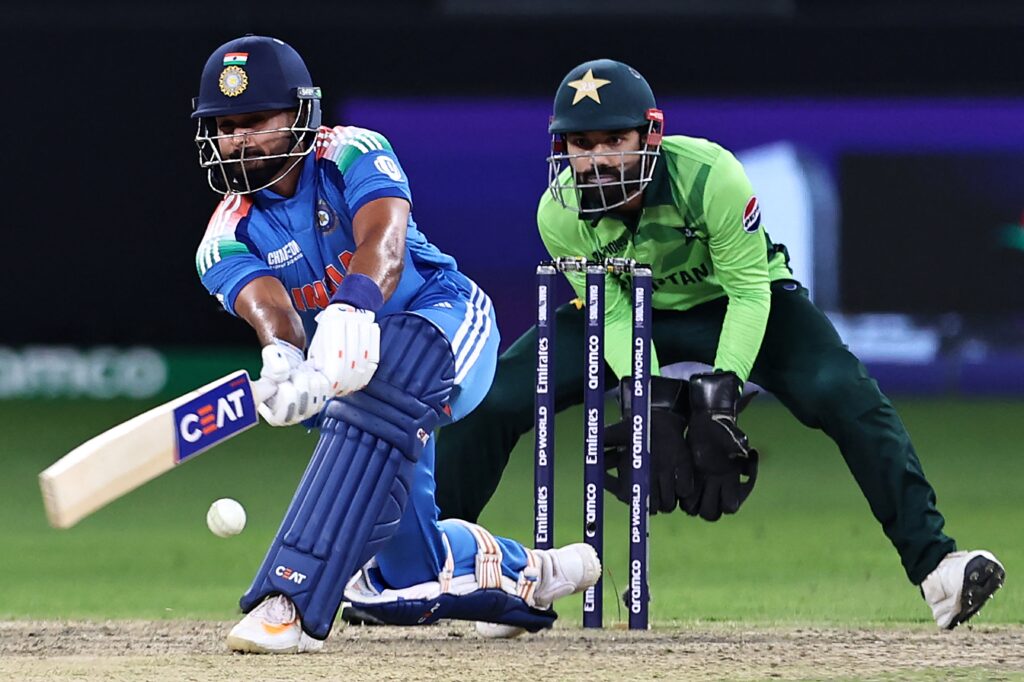
India's Shreyas Iyer (L) plays a shot as Pakistan's wicketkeeper captain Mohammad Rizwan watches during the ICC Champions Trophy one-day international (ODI) cricket match between Pakistan and India at the Dubai International Stadium in Dubai on February 23, 2025. (Photo by FADEL SENNA / AFP) (Photo by FADEL SENNA/AFP via Getty Images)
The rise of global T20 leagues outside traditional cricket nations (USA, Europe, Middle East) and their implications.
Cricket introduces Test Twenty, a revolutionary format combining Test cricket’s two-innings structure with Twenty20’s compressed timeframe, creating 80-over matches completed in single days. This innovative format targets younger audiences while maintaining traditional cricket elements.
Format Structure Explained
Test Twenty features 80 total overs with both teams batting twice for 20 overs each innings. This structure maintains Test cricket’s strategic depth through multiple innings while fitting into manageable single-day timeframes. The format applies both Test and T20 rules with refined adjustments suited to this hybrid approach.
Matches can conclude in wins, losses, ties, or draws similar to traditional Test cricket. This outcomes variety distinguishes Test Twenty from limited-overs formats where draws prove impossible. The format preserves Test cricket’s complexity within abbreviated timeframes.
Target Demographic
Test Twenty specifically aims engaging audiences aged 13-19 years old. This demographic often finds traditional Test cricket too lengthy while considering T20 insufficiently strategic. The new format targets this middle ground combining excitement with tactical depth.
Teenage viewers aged 13-19 can watch matches without tickets. This accessibility initiative removes financial barriers encouraging youth attendance and engagement. Building young cricket audiences ensures sport’s long-term sustainability and cultural relevance.
Inaugural Championship Details
The first two Test Twenty editions will occur in India with the inaugural championship commencing January 2026. Six franchises will compete: three from India and three from Dubai, London, and the United States. This international representation demonstrates cricket’s global ambitions beyond traditional strongholds.
Each team features 16 players enabling squad rotation and specialization. This roster size balances depth against manageability. Teams can develop tactical variations through personnel changes across tournament matches.
Advisory Board Expertise
Test Twenty’s advisory board includes cricket legends Harbhajan Singh, AB de Villiers, Sir Clive Lloyd, and Matthew Hayden. This collective expertise ensures format rules and structures benefit from world-class playing experience and tactical knowledge.
These respected figures provide credibility and legitimacy to the experimental format. Their involvement signals serious intention behind Test Twenty rather than gimmicky innovation. Player buy-in proves crucial for new format success.
Strategic Innovations
The two-innings structure creates unique tactical considerations absent from standard T20 cricket. Teams must balance first-innings aggression against setting defendable totals across multiple batting opportunities. This strategic complexity adds depth distinguishing Test Twenty from straightforward T20 contests.
Bowling and batting orders require more sophisticated planning across four innings compared to single-innings formats. Captains must manage resources strategically across extended matches while maintaining attacking intent. These tactical elements should appeal to cricket purists.
Scheduling Advantages
Single-day completion enables Test Twenty fitting into busy cricket calendars without multi-day commitments. This scheduling flexibility makes the format viable for packed international and franchise cricket schedules. Teams can participate without extended time commitments disrupting other competitions.
The compressed timeframe also suits modern entertainment consumption patterns. Fans can watch complete matches in single sittings rather than committing to multi-day engagement. This convenience should attract casual fans alongside dedicated cricket followers.
Commercial Potential
Test Twenty’s innovative format provides fresh commercial opportunities through distinctive branding and marketing approaches. The format’s youth focus aligns with advertiser desires reaching younger demographics. Franchise opportunities attract investors seeking cricket involvement without traditional format commitments.
Free tickets for teenagers create immediate audience base while building long-term fan loyalty. This loss-leader strategy invests in future paying customers. Commercial success depends on converting youth attendance into sustained engagement.
Broadcasting Considerations
The single-day format suits television broadcasting through manageable time commitments and predictable scheduling. Networks can allocate programming slots confidently without multi-day uncertainty. This broadcasting convenience should attract media partnerships and rights investments.
Highlights packages and digital content can capture complete matches compactly. This content suits social media consumption patterns and shortened attention spans. Test Twenty’s structure enables comprehensive yet digestible match coverage.
Potential Challenges
Introducing another cricket format risks further fragmenting already crowded cricket calendar. Players face additional competition for time and energy across formats. Managing format proliferation without overwhelming participants challenges cricket administration.
Convincing traditional cricket fans embracing yet another format variation proves difficult. Some purists may view Test Twenty as unnecessary gimmick diluting cricket’s essence. Building acceptance across diverse cricket audiences requires careful messaging and quality cricket.
Global Expansion Plans
Including franchises from Dubai, London, and United States demonstrates Test Twenty’s global ambitions. This international footprint distinguishes the format from India-centric leagues. Success in diverse markets validates cricket’s worldwide viability beyond traditional strongholds.
Future expansion into additional territories depends on inaugural championship success. Sustainable global presence requires proving format viability and commercial sustainability. Test Twenty’s international aspirations represent cricket’s evolutionary direction toward worldwide sporting prominence.
Conclusion
Test Twenty represents bold cricket innovation combining traditional Test cricket’s strategic depth with T20’s accessible timeframes creating unique format targeting younger audiences while maintaining tactical complexity. Success depends on balancing innovation against cricket’s essential character while proving commercial viability and fan appeal. This experimental format could influence cricket’s future development providing template for continued evolution addressing modern entertainment demands while respecting cricket heritage.